Description
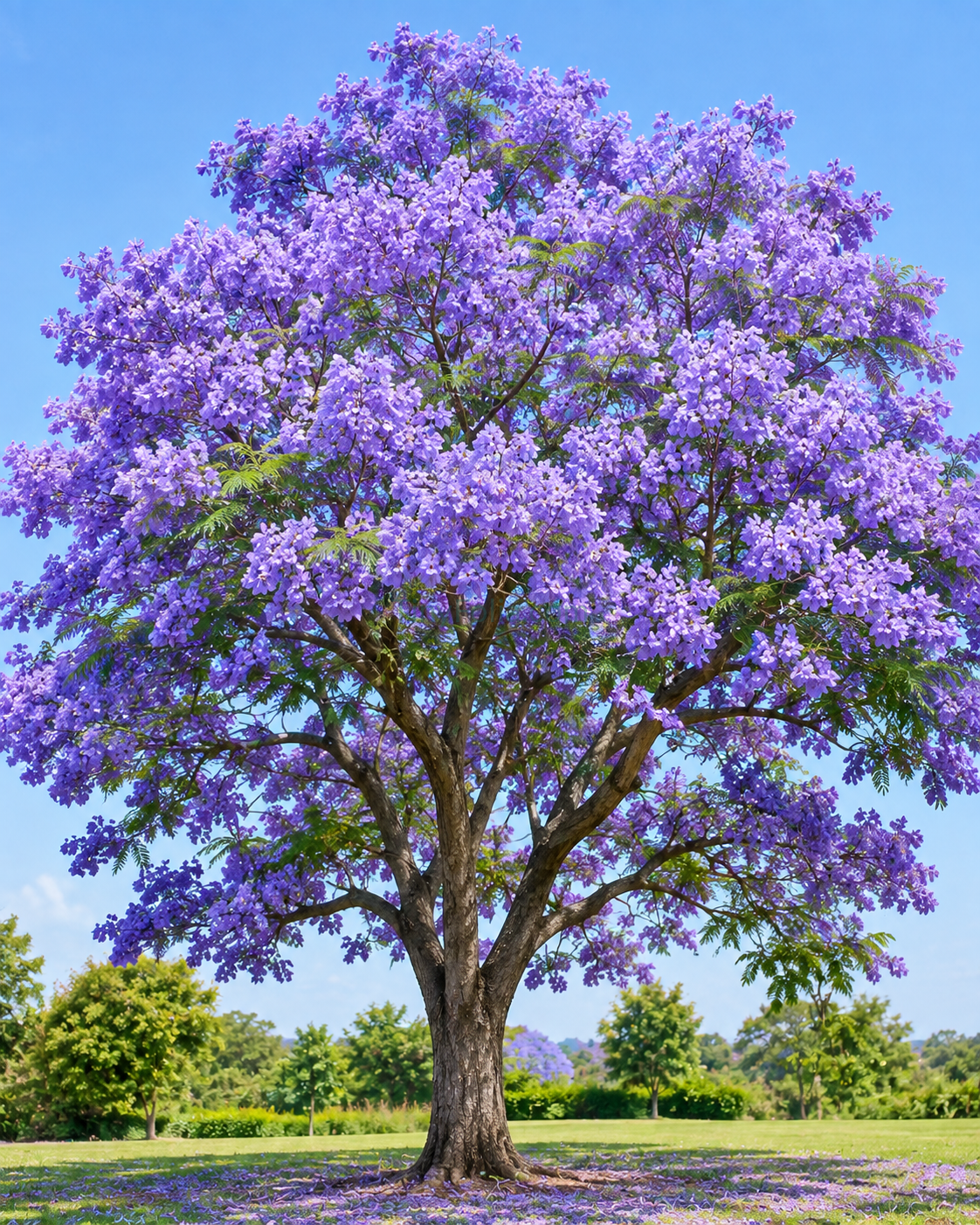
Add a wave of royal purple to your outdoor landscape with the majestic Jacaranda tree (Jacaranda mimosifolia), widely admired across Pakistan as Neela Gulmohar. Native to South America, this sub-tropical blooming specimen has adapted remarkably well to the climate of Punjab, Sindh, and Khyber Pakhtunkhwa, making it a prized choice among landscape architects and home gardeners alike. During late spring and early summer, the tree transforms into a spectacular cloud of violet-blue blossoms, creating soft shaded canopies and colorful carpets on lawns.
Features & Benefits
-
Vibrant Spring Blooms: Produces clusters of bell-shaped, purple-blue flowers that cover the branches before the feathery foliage fully unfurls.
-
Feathery Evergreen Foliage: Soft, fern-like green leaves provide dappled shade throughout the hotter months, helping cool down your garden ambient temperature.
-
Fast-Growing & Heat Tolerant: Once established, Jacaranda trees withstand intense Pakistani summers and dry spells with ease.
-
Property Value & Curb Appeal: Planted along driveways, property boundaries, or as a lawn centerpiece, it significantly boosts outdoor aesthetic value.
Indoor vs. Outdoor Suitability
Jacaranda is predominantly an outdoor tree due to its sun-loving nature and expansive growth potential. However, young saplings from TinyFolia can be kept in large patio containers or bright sunrooms temporarily before being transplanted into ground soil.
Growing Conditions in Pakistan
Jacaranda thrives in full sun exposure and well-draining soil. It handles the hot weather of Lahore, Multan, and Karachi effectively, though young saplings require consistent watering during their first two summers. Once rooted, it becomes moderately drought-tolerant.
Plant Care Guide
-
Light: Requires full sun (at least 6 hours of direct sunlight daily) for maximum flower production.
-
Water: Water thoroughly twice a week during summer. Reduce watering in winter months when the plant enters dormant phases. Avoid soggy, waterlogged roots.
-
Soil: Grows best in well-draining, sandy loam soil mixed with organic compost. Neutral to slightly acidic soil pH is ideal.
-
Temperature: Thrives in temperatures between 20°C to 40°C. Protect very young saplings from extreme frost in northern regions during peak winter.
-
Fertilizer: Feed with a balanced NPK fertilizer or well-rotted organic manure (Bhal/Gobar Khad) in early spring before the bloom cycle starts. Avoid high-nitrogen fertilizers as they promote leaves over flowers.


Reviews
There are no reviews yet.