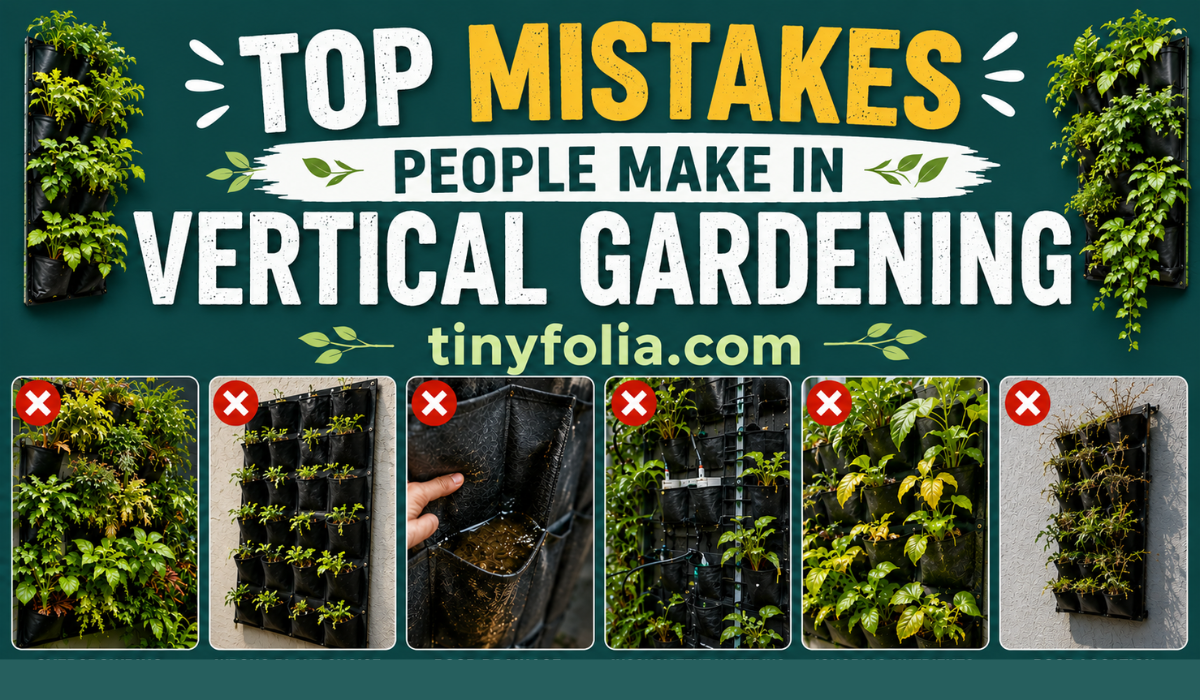
Vertical gardening is an amazing way to grow plants when you do not have much space. By growing your plants up a wall or a trellis instead of across the ground, you can turn a tiny balcony or a blank fence into a lush, green paradise. It looks beautiful, saves space, and makes harvesting a breeze. However, avoiding common vertical gardening mistakes is important if you want your plants to stay healthy and thrive.
Growing plants on a wall is very different from growing them in the ground. Many beginners jump right in, build a cool structure, and then watch their plants dry out or die. If your vertical garden is struggling, you are not alone!
Let’s break down the most common mistakes people make when setting up a vertical garden and, more importantly, how you can fix them.
This is the number one reason vertical gardens fail. Just because a plant looks pretty in a magazine does not mean it will survive in a wall planter.
When you plant vertically, the roots do not have much room to stretch out. If you choose plants that need deep, massive root systems, they will quickly become root-bound and stop growing. You also have to think about how the plants grow. If you put a huge, bushy plant at the top of your wall, it will block the sun from reaching the smaller plants below it.
For a successful vertical garden, you want plants with shallow roots. Herbs, leafy greens, and trailing vines are usually your best friends.
| Plant Type | Good or Bad? | Why? |
| Lettuce and Spinach | Excellent | They have shallow roots and do not need tons of heavy soil. |
| Strawberries | Excellent | They trail down beautifully and love good drainage. |
| Large Tomatoes | Poor | They need deep soil, heavy support, and tons of water. |
| Root Veggies (Carrots, Potatoes) | Poor | They need deep, loose dirt to form their roots. |
Watering a vertical garden is tricky. When you pour water into the top row of plants, gravity immediately pulls that water straight down.
A huge mistake is treating a living wall like a flat garden bed. If you just spray the whole wall with a hose, the plants at the top will dry out in a few hours, while the plants at the very bottom will be drowning in puddles. The top row always dries out the fastest because it is exposed to the most wind and sun.
To fix this, you need a smart watering plan. The best solution is installing a simple drip irrigation system. This slowly drips water to every single row at the exact same time. If you are watering by hand, always give the top rows extra water and check the bottom rows with your finger to make sure they are not soaking wet.
| The Problem | How to Fix It |
| Top plants are always dry | Add water-retaining gel or compost to the top soil. Water this row twice. |
| Bottom plants are rotting | Put plants that love wet soil (like mint or ferns) at the very bottom. |
| Water runs off the dry dirt | Water slowly. Give it a tiny splash, wait a minute, then water again. |
Plants need sunlight to make food, but not all plants need the same amount. A common mistake is building a beautiful vertical planter, filling it with sun-loving flowers, and then hanging it on a wall that stays in the shade all day.
Before you build or hang anything, spend a day watching your chosen wall. Does it get morning sun? Does it get blasted by the hot afternoon sun? Is it covered by a tree’s shadow?
If your wall gets blazing hot sun all day, delicate ferns and lettuces will crisp up and die. You will need tough plants like succulents or thyme. If your wall is mostly shaded, you cannot grow tomatoes or peppers, but you can grow beautiful hostas, mint, or trailing ivy. Always match the plant to the light you actually have, not the light you wish you had.
Dirt is incredibly heavy. Wet dirt is even heavier. One of the scariest mistakes you can make is underestimating how much your vertical garden will weigh once it is fully planted and watered.
If you use cheap plastic hangers, flimsy nails, or weak wooden pallets that rot easily, your entire garden might crash to the ground during a rainstorm. Always use heavy-duty screws and find the studs in your wall if you are hanging planters on a house or fence. It is always better to over-build your frame than to wake up and find your garden in pieces on the patio.
You cannot just dig up dirt from your backyard and put it in a vertical planter. Regular garden dirt is very heavy and packs down tightly when it gets wet. In a vertical container, heavy dirt will suffocate the plant roots and make the planter too heavy to hang safely.
You need a high-quality, lightweight potting mix. A good potting mix for vertical gardens will have plenty of perlite (those little white balls) to keep the soil fluffy and let the roots breathe. It should also hold moisture well without turning into thick mud. Because vertical planters hold less soil than a regular garden, the plants eat up the nutrients very fast. You will need to add a gentle liquid fertilizer to your watering routine every few weeks to keep them fed.
Vertical gardening is incredibly rewarding, but it takes a little extra planning. By choosing plants with shallow roots, keeping a close eye on your watering, and building a strong, sturdy frame, you can avoid the biggest traps that catch most beginners.
Start small. Try hanging a few pots or a simple herb rack before you try to cover a massive wall. Pay attention to what your plants are telling you. If they look droopy or yellow, adjust your water or light. With a bit of patience and the right setup, you will have a stunning, living wall in no time!
Visit TinyFolia.com for more information.
How Can We Help you?
