Let’s be honest. Life gets busy. Between work deadlines, family responsibilities, social commitments, and everything else on your plate, remembering to water a plant can easily slip through the cracks. And if you’ve ever come home to a sad, drooping plant that you forgot about for two weeks — you’re not alone.
But here’s the great news: you don’t have to choose between a busy lifestyle and a home full of beautiful, thriving plants. There are plenty of houseplants out there that practically take care of themselves. They don’t need daily watering, they don’t throw a fit if you miss a feeding, and they can handle a little neglect without drama.
In this guide, I’m going to walk you through the very best low-maintenance houseplants for busy plant parents. Whether you’re a total beginner or someone who’s killed a few plants and lost confidence, this list is for you. Let’s find your perfect plant match.
Before we dive into the list, let me explain what makes a plant truly low-maintenance. It’s not just about watering less. A genuinely easy plant also tolerates low light, bounces back from irregular care, resists common pests, and doesn’t need constant repotting or feeding.
When you choose the right plant for your lifestyle, you stop stressing and start enjoying. Your home looks greener and fresher, your air quality improves, and you actually develop confidence as a plant parent. One success leads to another, and before you know it, you’re the person with plants on every windowsill.
So let’s get into it.
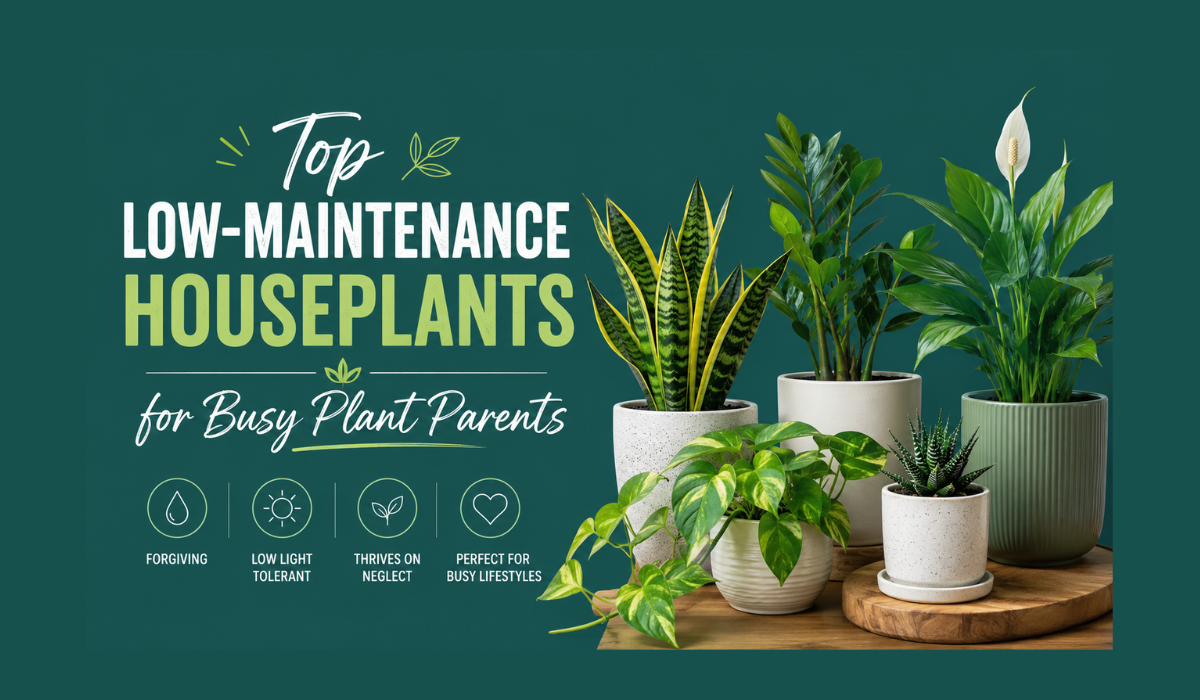
If there’s one plant that belongs on every busy person’s shelf, it’s the pothos. This trailing vine is practically indestructible. It grows in low light, bright light, and everything in between. It forgives missed waterings like a champ, and it actually tells you when it’s thirsty — the leaves start to curl slightly, giving you a heads-up before any real damage happens.
Pothos comes in several beautiful varieties — golden pothos, marble queen, neon green, and more. You can let it trail down from a high shelf, train it to climb a moss pole, or keep it in a simple pot on your desk. It grows fast, looks stunning, and asks for almost nothing in return.
Water it every one to two weeks, keep it anywhere with indirect light, and it will reward you with lush, cascading vines all year long. This is truly the starter plant that every busy person needs.
The snake plant has earned its reputation as one of the toughest houseplants alive. It stores water in its thick, upright leaves, which means it can go weeks — sometimes a month — without being watered. It handles low light better than almost any other plant. It doesn’t mind dry indoor air, drafts, or fluctuating temperatures.
What makes the snake plant extra special is that it’s also an excellent air purifier. NASA’s famous Clean Air Study found that snake plants can filter toxins like formaldehyde and benzene from indoor air. So not only is it easy to care for, it’s actively working to improve your living environment.
Place it in a corner, a bathroom, an office — pretty much anywhere. Water it every two to four weeks in summer and even less in winter. That’s genuinely all it needs. It’s the perfect plant for people who travel frequently or have unpredictable schedules.
The ZZ plant looks like it should be high-maintenance. Its glossy, dark green leaves are so perfect they almost look fake. But don’t let that fool you — this plant is incredibly forgiving and resilient.
ZZ plants have thick underground rhizomes that store water and nutrients, which is why they can survive long periods of drought. They grow well in low light and don’t need frequent fertilizing. In fact, the biggest mistake people make with ZZ plants is overwatering them. They genuinely prefer to dry out between waterings.
If you travel for work, live in a low-light apartment, or just tend to forget about your plants, the ZZ plant is one of your best options. Water it every two to three weeks, keep it away from direct harsh sunlight, and it will keep looking gorgeous with minimal effort from you.
Spider plants are cheerful, adaptable, and incredibly hard to kill. They thrive in a wide range of light conditions, they’re not picky about humidity, and they bounce back quickly from neglect. Even if you forget to water one for a few weeks, it usually recovers just fine once you give it a good drink.
One of the most fun things about spider plants is that they produce baby plants — called spiderettes — that hang off the mother plant on long, arching stems. You can snip those babies off and propagate them in water to grow new plants for free. It’s like the plant that keeps on giving.
Spider plants also ranked well in NASA’s air-purifying studies, making them a practical and beautiful addition to any room. They look especially gorgeous in hanging baskets where their long, striped leaves and trailing babies can really show off.
Aloe vera is one of those plants that earns its place in your home twice over — once as a stunning succulent, and again as a natural first-aid tool. That clear gel inside its plump leaves is genuinely useful for soothing minor burns, sunburns, and skin irritation.
As a plant, aloe is wonderfully low-maintenance. It’s a succulent, which means it stores water in its thick leaves and doesn’t need frequent watering. In fact, the number one way to kill aloe vera is to water it too much. Water it deeply every two to three weeks, make sure it’s in well-draining soil, give it a bright sunny spot, and it will thrive for years with almost no attention.
Aloe vera is perfect for a sunny windowsill in a kitchen or bathroom. It adds a clean, modern look to any space, and knowing it’s there ready for emergencies makes it extra satisfying to grow.
The peace lily is one of the few flowering houseplants that genuinely qualifies as low-maintenance. It produces elegant white blooms and thrives in low light — two things that are rare to find together in one plant. It’s a popular choice for offices and bedrooms because it doesn’t need a sunny window to look beautiful.
What makes peace lilies especially easy for busy people is that they communicate their needs very clearly. When they need water, their leaves droop dramatically. Water them when you see that droop, and they perk right back up within hours. It’s like having a plant that waves a flag when it’s thirsty.
Water your peace lily once a week or whenever the soil feels dry about an inch down. Keep it away from direct sunlight, which can scorch its leaves. It does appreciate some humidity, so giving it an occasional mist or placing it near a bathroom works well.
| Plant | Light Needs | Watering Frequency | Best For |
| Pothos | Low to bright indirect | Every 1–2 weeks | Beginners, shelves, hanging |
| Snake Plant | Low to indirect | Every 2–4 weeks | Any room, travelers |
| ZZ Plant | Low to indirect | Every 2–3 weeks | Dark apartments, offices |
| Spider Plant | Indirect to bright | Every 1–2 weeks | Hanging baskets, families |
| Aloe Vera | Bright direct/indirect | Every 2–3 weeks | Sunny kitchens, first aid |
| Peace Lily | Low to indirect | Once a week | Bedrooms, offices |
The rubber plant is a bold, statement-making houseplant that’s much easier to care for than it looks. Its large, waxy leaves — which come in deep green, burgundy, or variegated patterns — make it look like something you’d find in a designer home. But behind that impressive appearance is a seriously easygoing plant.
Rubber plants like bright indirect light and do well near a window that doesn’t get harsh afternoon sun. They only need watering when the top inch or two of soil dries out — about once a week in summer and less often in winter. They grow fairly slowly, which means you won’t need to repot them constantly. Just wipe the dust off their big leaves occasionally so they can absorb light properly, and they’ll stay healthy and handsome for years.
The name says it all. The cast iron plant earned its nickname by being almost completely indestructible. It tolerates deep shade, temperature extremes, irregular watering, dust, and poor soil — conditions that would destroy most other houseplants. It’s been a staple of Victorian-era homes and offices for good reason.
If you have a dark corner that you want to fill with some greenery, the cast iron plant is your answer. It grows slowly, which means you won’t have to repot it often. It rarely gets pests. And it can go weeks between waterings without any visible stress. It’s not the flashiest plant on this list, but if you want reliable, unfussy greenery in a difficult spot, nothing beats it.
Succulents are the internet’s favorite plants for good reason. They come in hundreds of shapes, colors, and sizes. They’re compact, adorable, and incredibly drought-tolerant. Their thick, fleshy leaves store water so efficiently that they can go two to three weeks — sometimes longer — between waterings.
The key to keeping succulents happy is making sure they get enough light and that their soil drains well. They hate sitting in wet soil, so always use a well-draining cactus or succulent mix and a pot with drainage holes. Place them on a sunny windowsill and water them deeply but infrequently, letting the soil dry out completely between sessions.
Popular beginner-friendly succulents include echeveria, haworthia (which tolerates lower light than most), sedum, and jade plants. Mix and match a few in a shallow pot for a beautiful, easy-care arrangement.
Dracaena is a large family of plants that includes dozens of varieties, many of which are fantastic for low-maintenance indoor growing. The dracaena marginata, with its spiky red-edged leaves, and the dracaena fragrans, also known as the corn plant, are two of the most popular and forgiving options.
Dracaenas do well in indirect light and only need watering every one to two weeks. One thing to note is that they’re sensitive to fluoride in tap water, which can cause brown leaf tips. If you notice that happening, switch to filtered or distilled water and you should see improvement. Otherwise, they’re sturdy, beautiful plants that grow tall and add a dramatic, tropical feel to any room.
Even the easiest plants need a little basic attention. Here are a few simple habits that will keep your low-maintenance plants looking their best without taking up much of your time.
Check before you water. The most common houseplant mistake is overwatering. Before you water any plant, stick your finger about an inch into the soil. If it still feels moist, wait a few more days. If it’s dry, go ahead and water deeply.
Use pots with drainage holes. No matter how low-maintenance your plant is, sitting in waterlogged soil will eventually kill it. Always use pots with holes at the bottom so excess water can escape.
Dust the leaves occasionally. Dusty leaves can’t absorb light as efficiently. A quick wipe with a damp cloth every few weeks keeps your plants clean and photosynthesizing at their best.
Feed lightly during growing season. Most low-maintenance plants don’t need much fertilizer, but a light feeding once a month in spring and summer gives them a nice boost. Use a balanced liquid fertilizer at half the recommended strength.
Watch for pests. Even easy plants can occasionally attract spider mites, mealybugs, or fungus gnats. Check the undersides of leaves every few weeks. Catching pests early makes them much easier to handle.
Before you head to the garden center or place an online order, think about your specific situation. How much natural light does your home get? Do you travel frequently? Do you have pets or small children? Some plants on this list — like peace lilies and dracaenas — can be toxic to cats and dogs, so that’s an important factor if you have furry family members at home.
| Plant | Pet-Safe? | Air Purifying? | Best Room |
| Pothos | ❌ Toxic to pets | ✅ Yes | Living room, bedroom |
| Snake Plant | ❌ Toxic to pets | ✅ Yes | Office, hallway |
| ZZ Plant | ❌ Toxic to pets | ✅ Moderate | Living room, office |
| Spider Plant | ✅ Pet-safe | ✅ Yes | Kids’ rooms, kitchens |
| Aloe Vera | ❌ Toxic to pets | ✅ Moderate | Kitchen, bathroom |
| Peace Lily | ❌ Toxic to pets | ✅ Yes | Bedroom, bathroom |
| Rubber Plant | ❌ Toxic to pets | ✅ Moderate | Living room |
| Cast Iron Plant | ✅ Pet-safe | ✅ Moderate | Any dark corner |
| Succulents | ✅ Most are safe | ❌ Minimal | Sunny windowsill |
| Dracaena | ❌ Toxic to pets | ✅ Yes | Living room, office |
Here’s what I want you to take away from this guide: having a busy life doesn’t mean you can’t have a home full of beautiful, healthy plants. It just means you need to choose the right plants — ones that work with your schedule instead of against it.
Start with one or two plants from this list. Get comfortable with their needs. Learn their watering rhythm. Celebrate when new leaves unfurl. Then add more when you’re ready.
The plants on this list are forgiving, resilient, and genuinely beautiful. They don’t need you to be a perfect plant parent. They just need you to show up occasionally with a little water and some good intentions.
And honestly? That’s something even the busiest person can manage.
For More Information please visit www.tinyfolia.com.
How Can We Help you?
