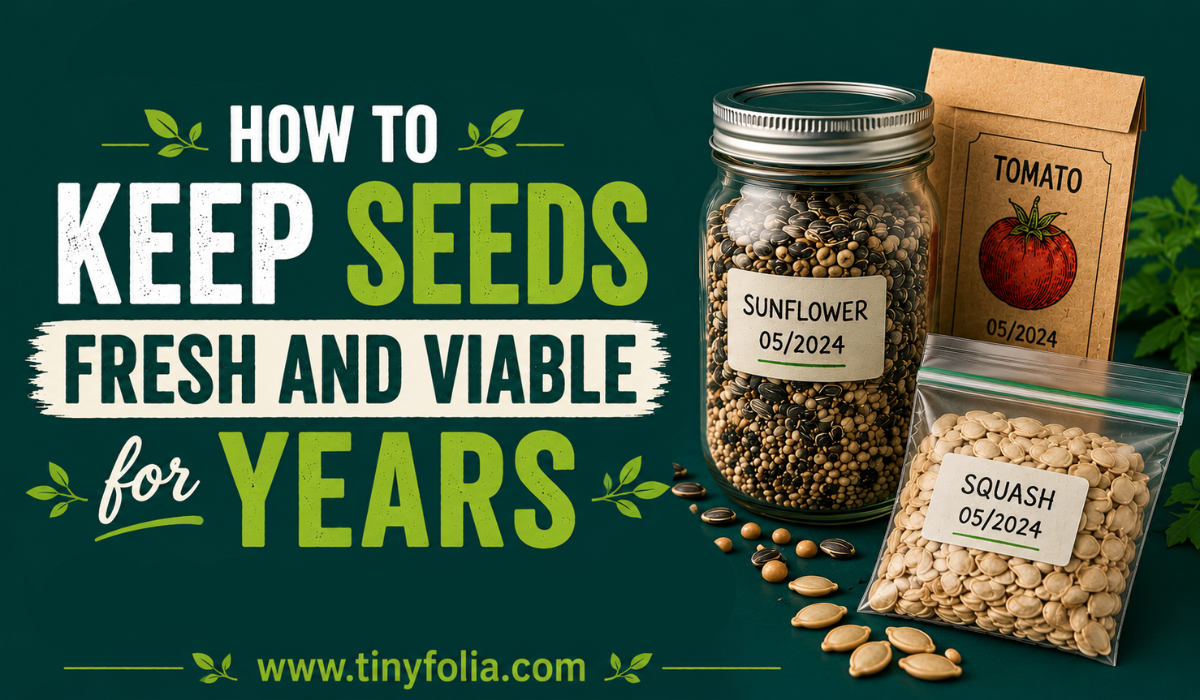
If you love gardening you probably know how satisfying it feels to grow plants from seeds. But here’s the thing seeds don’t last forever. If you store them the wrong way they dry out rot or simply lose the power to sprout. The good news? With the right knowledge and a few simple steps you can keep seeds fresh and viable for years sometimes even decades.
In this guide, I’ll walk you through everything you need to know about seed storage tips from understanding what makes a seed “viable” to the best containers conditions and tricks that professional gardeners use. Whether you’re saving seeds from your garden or buying bulk seeds, this article is for you. Learning how to extend seed shelf life doesn’t require expensive equipment just the right approach to long-term seed preservation at home.
Before we dive into storage tips, let’s talk about what seed viability actually means. A viable seed is one that can still germinate — meaning it has the energy and health to sprout into a plant. Over time, seeds naturally lose that ability. This process is called seed aging or deterioration.
Several things affect how long a seed stays viable. The type of plant matters a lot. For example, onion seeds go bad quickly, while tomato seeds can last up to 5 years. Temperature, humidity, light, and oxygen all play a role too. The warmer and wetter the storage environment, the faster seeds lose their viability. On the flip side, cool, dry, and dark conditions slow down that aging process significantly.
Think of seeds like tiny living things — because that’s exactly what they are. They breathe slowly, use up stored energy, and eventually run out of fuel. Your job as a seed saver is to slow that process down as much as possible.
You might wonder: Does seed storage really matter? The short answer is: absolutely yes. Poor seed storage is one of the most common reasons gardeners get frustrated when seeds don’t germinate.
When seeds are stored in warm, humid, or bright conditions, their germination rate drops quickly. A packet of tomato seeds stored in a hot garage might only have 20% germination after one summer. That same packet, stored properly in a cool and dark place, could still have 80–90% germination after 4–5 years.
Proper storage also saves you money. Seeds can be expensive, especially rare heirloom varieties. If you store them well, you won’t have to keep buying new packets every season. You can also share seeds with other gardeners or build a personal seed bank for tough times.
Let’s get into the most important part — the actual storage conditions. There are four key factors you need to control: temperature, humidity, light, and oxygen.
Seeds stay freshest in cool temperatures. The ideal range is between 32°F and 41°F (0°C to 5°C). A refrigerator works great for this. Some gardeners even use a freezer for long-term storage, but you need to be more careful with freezing since moisture can damage seeds if they aren’t fully dry first.
A simple rule of thumb: the sum of the temperature (in Fahrenheit) and the relative humidity percentage should not exceed 100. For example, if your storage area is 60°F, you want humidity below 40%. This is a well-known guideline among seed saving experts.
Moisture is the enemy of seed storage. High humidity causes seeds to absorb water, which triggers the germination process — even when there’s no soil. It also encourages mold and bacteria growth, which can destroy your seeds fast.
You want humidity to be below 50%, and ideally closer to 25–35%. The easiest way to control humidity in your seed storage container is by using desiccants — small packets of silica gel that absorb moisture from the air. You can find these in vitamin bottles, shoe boxes, or buy them in bulk online.
Light signals seeds that growing conditions might be nearby. Light won’t damage seeds quickly, but long-term exposure to sunlight or UV rays can reduce seed quality. Always store seeds in dark containers or places where light doesn’t reach.
Oxygen speeds up cellular aging in seeds. For very long-term storage — think 10+ years — some serious seed savers remove oxygen from their storage containers using vacuum sealing or oxygen absorber packets. Not essential for short-term storage, but helpful for longer periods.
The container you use makes a big difference. Here are the best options depending on your needs:
Mason jars are one of the best options for home seed storage. Glass doesn’t absorb odors or chemicals, and a good rubber-sealed lid keeps air and moisture out. Just add a silica gel packet inside, label your jar clearly, and store it somewhere cool and dark.
Zip-lock bags work well for short-term storage — up to a couple of years. They’re lightweight, cheap, and easy to label. However, plastic is not airtight over time and can allow small amounts of moisture in. Use them inside a larger sealed container for better protection.
Food-safe airtight plastic containers with locking lids (like Tupperware) work well when you have many seed packets to store. Add silica gel packets inside, keep the container in the fridge, and you’re good to go.
For the most serious seed savers, vacuum-sealed bags offer excellent protection. They remove nearly all the air and create an almost perfect storage environment. These are ideal for rare or heirloom seeds you want to keep viable for 10 or more years.
Here’s a simple process you can follow to get your seeds ready for long-term storage:
Step 1 — Harvest or Collect Seeds If you’re saving seeds from your garden, wait until the plant is fully mature. The seeds should be dry and hard, not soft or green. Tomatoes, peppers, squash, and flowers are all easy to save from.
Step 2 — Clean and Dry Seeds Rinse off any pulp or plant material, then spread seeds out on a paper towel or screen. Let them air-dry completely at room temperature for 1–2 weeks. The seeds should be so dry they snap or crack when you bend them, not bend or squish.
Step 3 — Label Everything Write the plant name, variety, and date on each packet or envelope. Trust me — you’ll forget what’s in those bags after a few months. A permanent marker on a piece of tape works fine.
Step 4 — Add Desiccant Place a small silica gel packet or a bit of powdered milk wrapped in tissue paper inside your container. This absorbs any leftover moisture and keeps things dry.
Step 5 — Seal and Store Place your labeled seed packets into a sealed container and store it in the refrigerator or a cool, dark cabinet. If you’re using a freezer, make sure the seeds are completely dry first and let the container come to room temperature slowly before opening.
Different seeds have different natural lifespans. Here’s a quick reference table to help you know what to expect:
| Plant Type | Average Viability |
| Onion, Leek | 1–2 years |
| Parsley, Parsnip | 1–2 years |
| Sweet Corn | 2–3 years |
| Spinach, Lettuce | 2–3 years |
| Carrot, Celery | 3 years |
| Peas, Beans | 3–4 years |
| Tomato, Pepper | 4–5 years |
| Cabbage, Broccoli | 4–5 years |
| Cucumber, Melon | 5–6 years |
| Radish, Turnip | 5–6 years |
As you can see, some seeds are naturally short-lived. For those, you’ll want to buy fresh seeds more often or test germination rates before planting season.
Before planting season arrives, it’s smart to test your older seeds. Here’s a simple germination test you can do at home:
Take 10 seeds from the batch and place them on a damp paper towel. Fold the towel over the seeds and put it in a plastic bag. Keep the bag in a warm spot (around 70°F/21°C) for the number of days listed on the seed packet for germination. Then count how many seeds sprouted.
If 8 out of 10 sprouted, you have an 80% germination rate — that’s great! If only 3 out of 10 sprouted, that’s 30%, which is pretty poor. You can still use those seeds, but you’ll want to plant more than usual to get enough plants.
Let me share the most common mistakes people make with seed storage, so you can avoid them:
Storing seeds while they’re still damp. This is the number one killer. Mold will destroy your seeds within weeks. Always make sure seeds are completely dry before sealing them up.
Keeping seeds in a warm kitchen cabinet. Heat speeds up aging. A cabinet above the stove or near the oven is one of the worst places to store seeds.
Forgetting to label your seeds. Unlabeled seeds are useless because you won’t know what they are or how old they are.
Opening refrigerator-stored seeds right away. When you take cold seeds out of the fridge, condensation forms on them. Always let your sealed container reach room temperature before opening it.
Using non-airtight containers. Paper envelopes alone are fine for short-term storage, but not for years. Moisture gets in over time.
If you want to build a serious seed bank that lasts for 10, 20, or even 50 years, here are a few extra strategies:
Store seeds at freezer temperature (-4°F / -20°C) after making absolutely sure they have less than 8% moisture content. This is how major global seed vaults like the Svalbard Global Seed Vault in Norway store seeds for centuries.
Use oxygen absorber packets along with vacuum sealing for the best possible protection. These small packets pull oxygen out of sealed containers, dramatically slowing the aging process.
Keep backup copies in different locations. If one storage area is damaged by a flood, fire, or power outage, you won’t lose everything.
Rotate your seed stock regularly. Use your oldest seeds first and replace them with fresh ones. This way, you always have a supply of high-viability seeds on hand.
| Storage Goal | Recommended Method | Expected Viability |
| 1–2 years (short-term) | Zip-lock bag + cool cabinet | Good for most seeds |
| 3–5 years (medium-term) | Glass jar + silica gel + fridge | Excellent for most seeds |
| 5–10 years (long-term) | Vacuum bag + oxygen absorber + freezer | Great for dry seeds |
| 10+ years (seed bank) | Sealed foil pouch + oxygen absorber + deep freeze | Best for heirloom/rare seeds |
Keeping seeds fresh and viable for years isn’t complicated. It just requires a little attention to temperature, humidity, light, and oxygen. When you store seeds the right way, you protect your investment, preserve rare plant varieties, and make sure you always have healthy, productive seeds ready for planting.
Start simple — grab a few mason jars, add some silica gel packets, label everything clearly, and pop them in the fridge. That alone will extend the life of most seeds by several years. As you grow your seed saving skills, you can move into more advanced techniques like vacuum sealing and freezer storage.
Remember, every seed is a tiny miracle waiting to happen. With the right care, that miracle can happen years — even decades — from now. Happy seed saving!
Visit TinyFolia.com for more information.
How Can We Help you?
