If you’ve ever walked down a street in Lahore in May and looked up to see a sky full of purple jacaranda blossoms, you already know the magic that flowering trees bring to Pakistan. These trees don’t just add beauty — they give shade, attract birds, cool the air, and turn an ordinary neighborhood into something truly special. Whether you’re planting a garden at home, working on a landscaping project, or just curious about the common flowering trees in Pakistan, this guide has everything you need.
Pakistan has a rich variety of ornamental trees. With its different climate zones — from the hot plains of Punjab and Sindh to the cooler hills of KPK and the coastal areas of Karachi — Pakistan supports a wide range of flowering trees. Some bloom in spring, some in summer, and a few flower almost all year long. Let’s explore the Best Flowering Trees in Pakistan, their names, care tips, and where they grow best.
Table 1: Most Popular Flowering Trees in Pakistan at a Glance
| Tree Name | Scientific Name | Flower Color | Best Climate |
| Amaltas | Cassia fistula | Bright Yellow | Hot & Dry (Punjab, Sindh) |
| Gulmohar | Delonix regia | Red / Orange | Tropical & Subtropical |
| Jacaranda | Jacaranda mimosifolia | Purple / Blue | Mild & Warm (Islamabad, Lahore) |
| Kachnar | Bauhinia variegata | Pink / White | Mild to Warm (All Regions) |
| Champa | Plumeria spp. | White / Yellow | Hot & Humid |
| Bottlebrush | Callistemon spp. | Bright Red | Hot & Dry |
| Tabebuia | Tabebuia rosea | Pink / Yellow | Warm & Tropical |
| Queen’s Crape Myrtle | Lagerstroemia speciosa | Purple / Lavender | Hot & Humid |
Before we dive into the flowering trees Pakistan list, let’s talk about why these trees matter so much. Pakistan faces serious environmental challenges — air pollution, rising temperatures, and deforestation. Planting flowering trees is one of the best things you can do for your community and your home.
Flowering trees provide shade that naturally cools your home and outdoor spaces. They clean the air by absorbing carbon dioxide and releasing oxygen. Many of them attract bees, butterflies, and birds, which helps support local ecosystems. And of course, they make your garden look absolutely stunning!
Beyond the environment, there’s a very practical reason people love garden trees in Pakistan — they increase property value. A well-planted home garden with flowering trees is more attractive and commands better prices in the real estate market. So planting these trees is both a gift to nature and a smart investment.
Let’s get into the heart of this article — the flowering trees in Pakistan with names. We’ve covered popular ornamental trees, native varieties, and exotic species. There’s something here for every type of garden, home, and climate zone across the country.
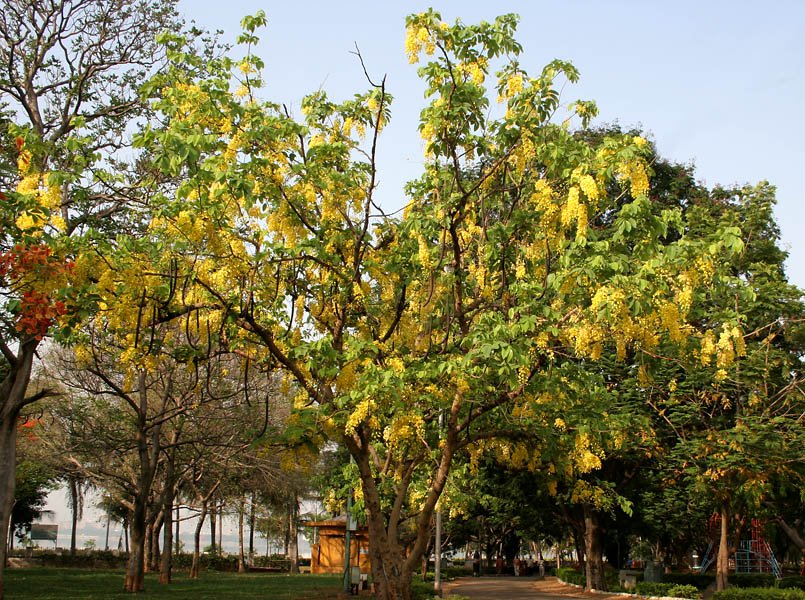
If you’re looking for fast growing Flowering Trees in Pakistan that also survive the scorching summer heat, Amaltas is your best friend. Known locally as the ‘Golden Shower Tree,’ this beauty explodes with long, bright yellow flower clusters every year between April and June. You’ll see it lining major highways, parks, and gardens all across Punjab and Sindh.
Amaltas is one of the most heat resistant flowering trees in Pakistan. It thrives in temperatures above 40°C and needs very little water once it’s established. It’s also drought tolerant, making it perfect for regions like Multan, Bahawalpur, and Hyderabad where summers are brutal. If you want low maintenance flowering trees in Pakistan, Amaltas is at the top of the list.
It grows to about 10–15 meters tall and creates excellent shade. The long yellow flower pods hang down like golden chains, which is why it’s also called the Golden Shower Tree. It’s not just beautiful — the pods have medicinal uses in traditional Pakistani herbal medicine too.
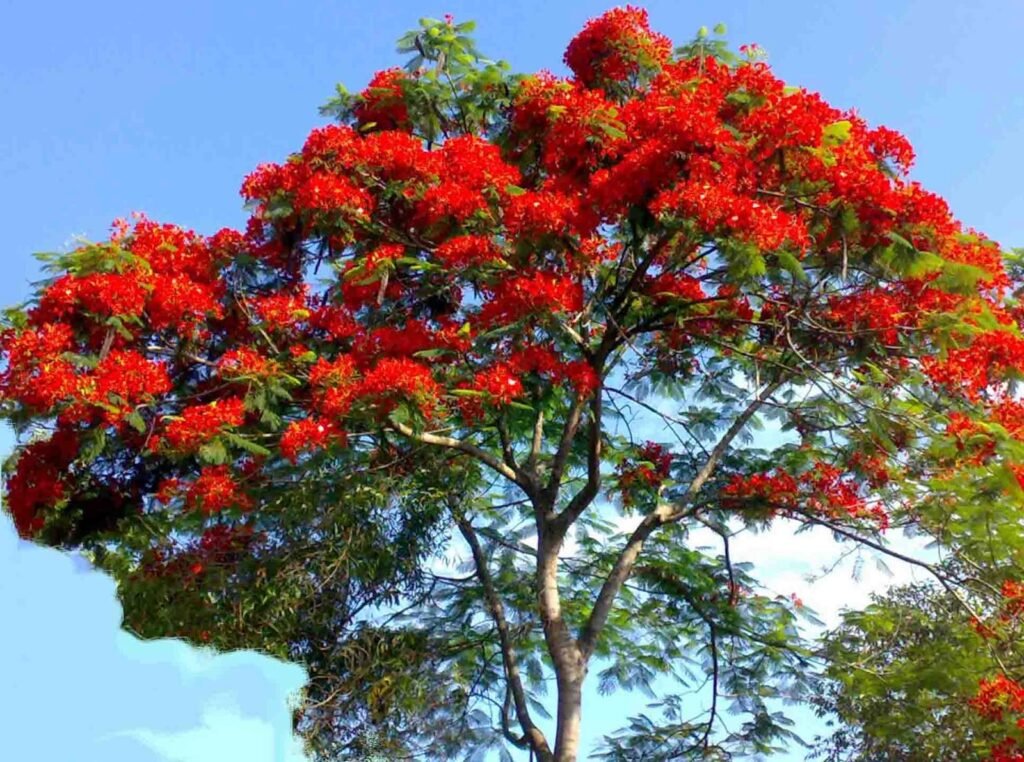
Gulmohar is probably the most iconic flowering tree in Pakistan. Drive through any city in summer and you’ll see its wide umbrella-shaped canopy blazing with red and orange blooms. It’s dramatic, it’s gorgeous, and it’s one of the most sought-after ornamental trees in Pakistan.
This tree loves heat and humidity, which makes it one of the best flowering trees for Karachi’s coastal climate. It blooms from May through August, covering the entire tree with dense clusters of red, orange, or yellow-red flowers. The flat, feathery leaves are also beautiful even when the tree isn’t blooming.
Gulmohar is a fast growing flowering tree in Pakistan — it can grow up to 2 meters per year under good conditions. It does need space because it spreads wide. But if you have a large garden or you’re doing a landscaping project, Gulmohar is one of the top flowering trees in Pakistan for landscaping. It provides deep, cool shade and creates a stunning visual impact.
You May Also Read: Types of Palm Trees in Pakistan
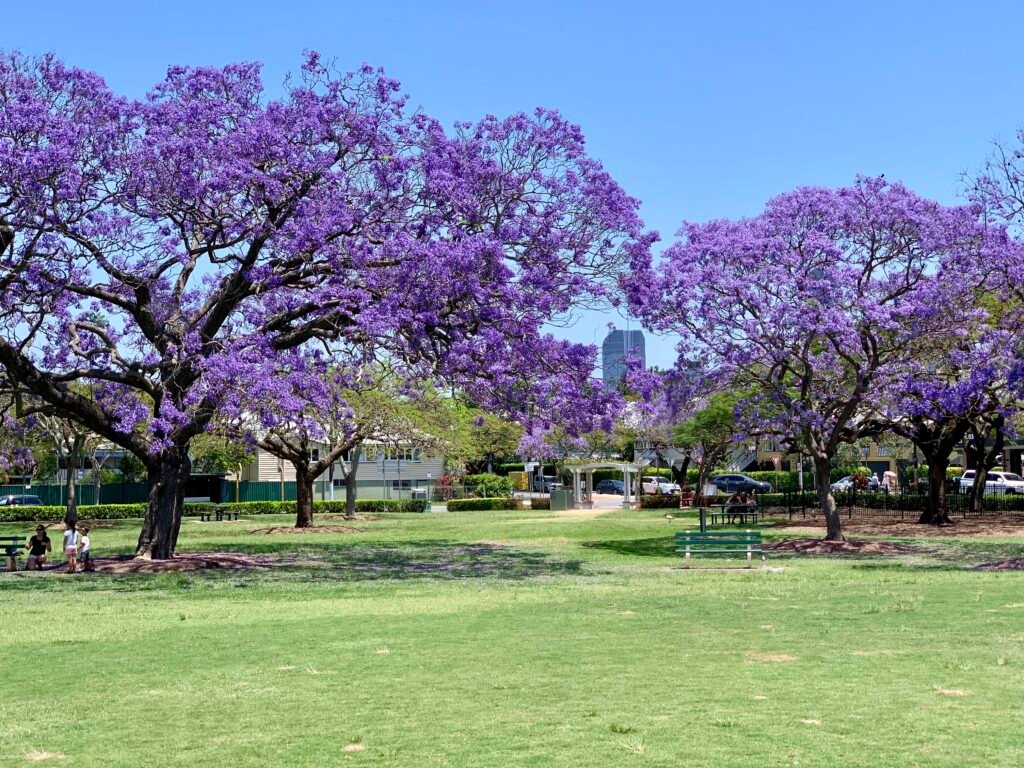
Ask anyone in Islamabad or Lahore about their favorite spring tree and most will say Jacaranda. This tree is famous for its stunning lavender-purple flowers that cover every branch before the leaves even appear. When a Jacaranda is in full bloom, it looks like someone painted the entire tree in purple.
Jacaranda is one of the most popular flowering trees in Islamabad and Lahore, especially in residential neighborhoods and public parks. It prefers mild temperatures and doesn’t do as well in extreme heat, which is why it thrives better in the northern regions. It blooms in spring, usually around March to May, and the flower drop creates a beautiful carpet on the ground beneath.
For flowering trees in Pakistan for home garden use, Jacaranda is a top pick. It grows to about 7–10 meters, making it manageable for larger home gardens. It needs moderate watering and full sunlight. If you live in Islamabad, Murree Road, or Lahore’s older neighborhoods, you’ve likely seen rows of Jacaranda trees creating magical purple tunnels in spring.
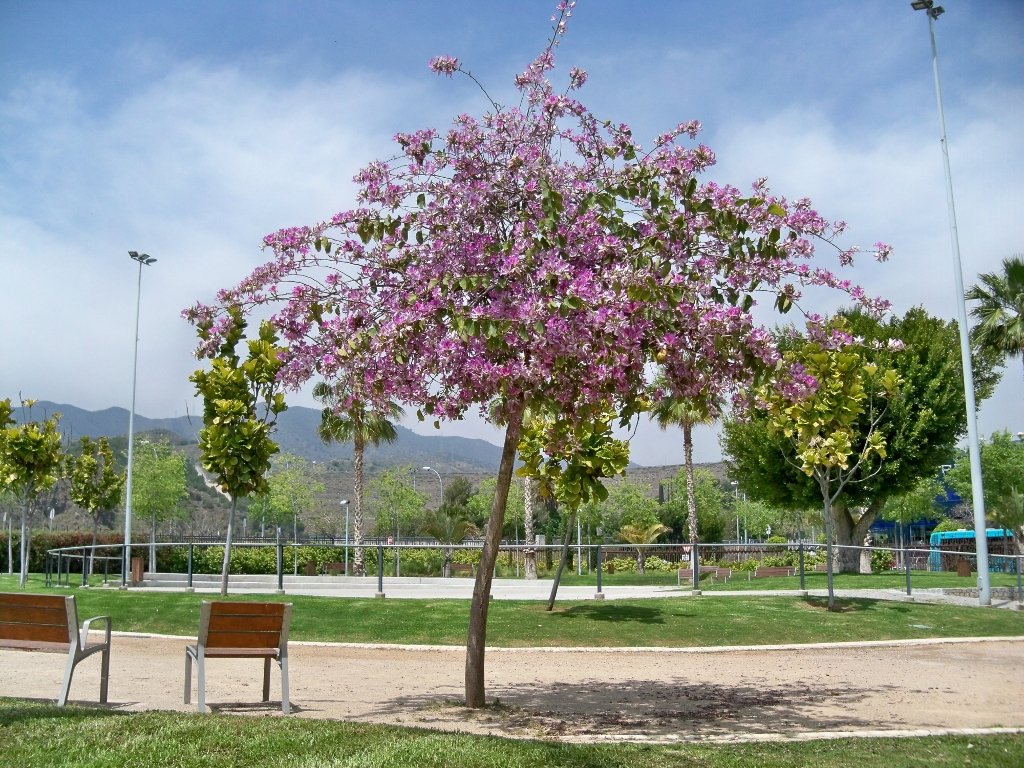
Kachnar is one of the most beloved native trees of Pakistan. Its flowers look like orchids — large, pink, white, or purple, with delicate petals that seem almost hand-painted. It blooms in late winter and early spring, usually from January to March, which makes it one of the first signs that winter is ending.
What makes Kachnar special is that it’s both beautiful and useful. The flowers and buds are edible and commonly used in Pakistani cuisine — particularly in curries and pickles. It’s a truly multi-purpose tree that combines beauty with cultural and culinary value.
Kachnar is also one of the small flowering trees in Pakistan, typically growing to 5–10 meters. This makes it ideal for home gardens where space is limited. It doesn’t need a lot of water once established and works well in most of Pakistan’s climate zones. You’ll find it naturally growing across Punjab, Sindh, and even parts of KPK. It’s truly one of the common flowering trees in Pakistan that every garden owner should consider.
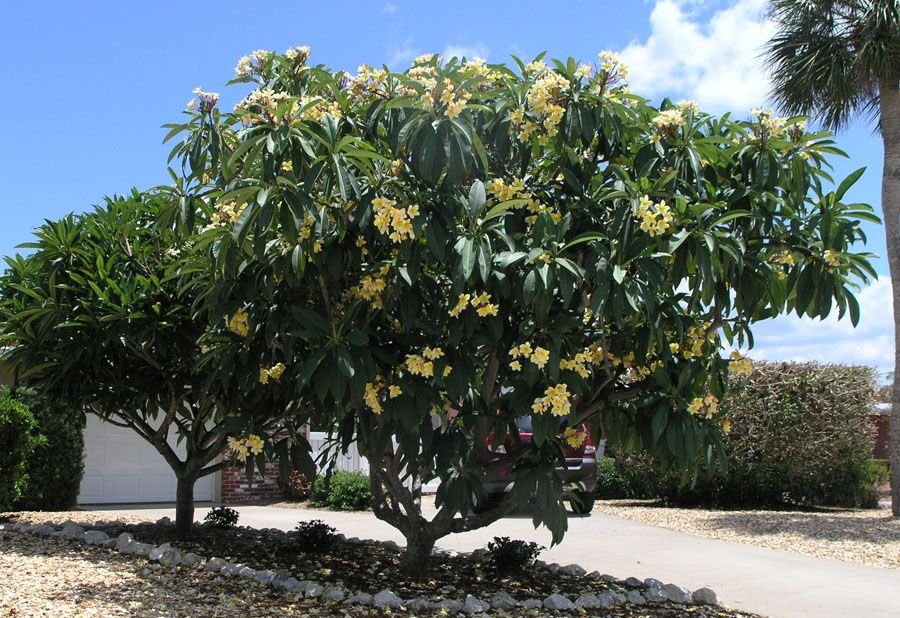
If you’ve ever smelled a Champa flower, you know why it’s so popular in Pakistani homes and gardens. This tree produces white, yellow, or pink flowers with an incredibly sweet, calming fragrance. Many Pakistani families grow Champa in their courtyards and terraces, and the flowers are used in religious ceremonies and home decoration.
Champa is one of the best flowering trees in Pakistan for home garden planting because it stays relatively small — usually 3–5 meters — and can even be grown in large pots. It thrives in hot weather and is very drought tolerant, making it a great fit for cities like Karachi, Multan, and Hyderabad. It blooms from spring through summer, sometimes even into fall.
One of the nicest things about Champa is that it’s very low maintenance. Once you plant it in a sunny spot and give it occasional watering, it basically takes care of itself. It’s among the most heat resistant flowering trees in Pakistan, which is why it’s been a staple of South Asian gardens for centuries. If you’re asking what are the best flowering trees in Pakistan for easy care, Champa is always on the list.
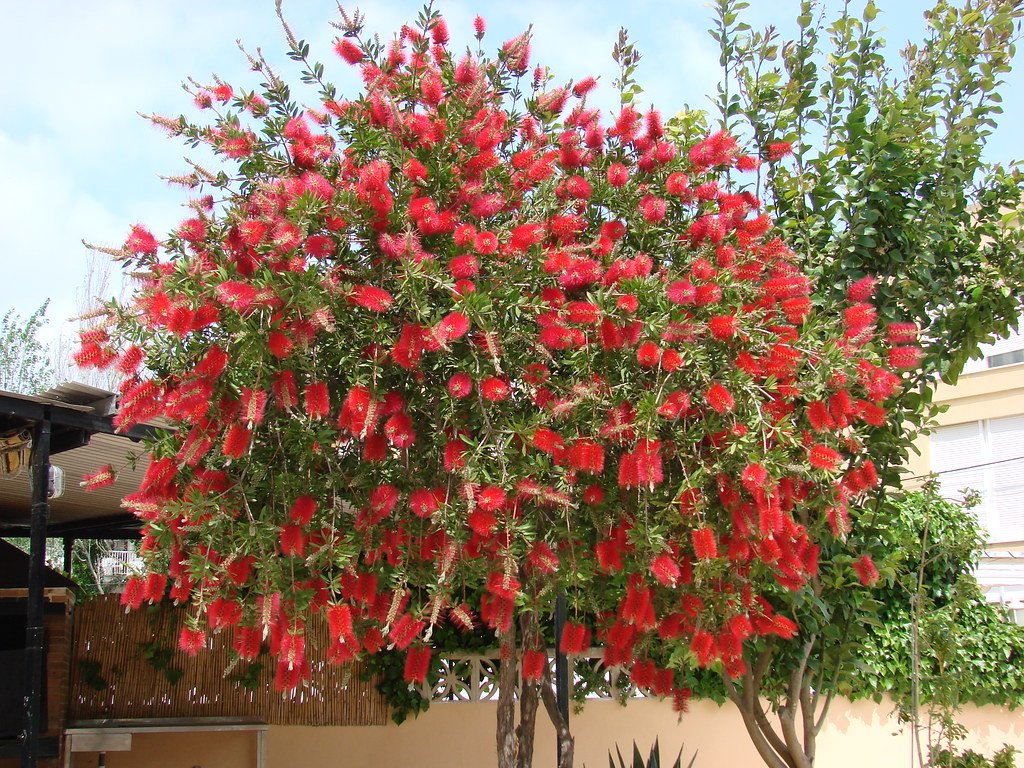
If you want something a little unusual that will make your garden stand out, the Bottlebrush tree is a fantastic choice. Its bright red, cylindrical flower spikes look exactly like bottle brushes — it’s one of the most distinctive flowering plants in Pakistan. It blooms heavily in spring and can bloom again in fall in some areas.
Bottlebrush is one of the top evergreen flowering trees in Pakistan. It keeps its leaves all year and provides both visual interest and practical shade. It’s very hardy and does well in hot, dry conditions, making it one of the better drought tolerant flowering trees in Pakistan. It’s also a favorite among birds, especially sunbirds and hummingbirds-equivalent species that love its nectar-rich flowers.
For landscaping projects or flowering trees in Pakistan for landscaping purposes, Bottlebrush is excellent along walls, fences, and property borders. It’s also a great option for flowering trees in Karachi because it handles coastal heat and humidity well. It grows to about 5–8 meters and needs very little fertilizer or special care.
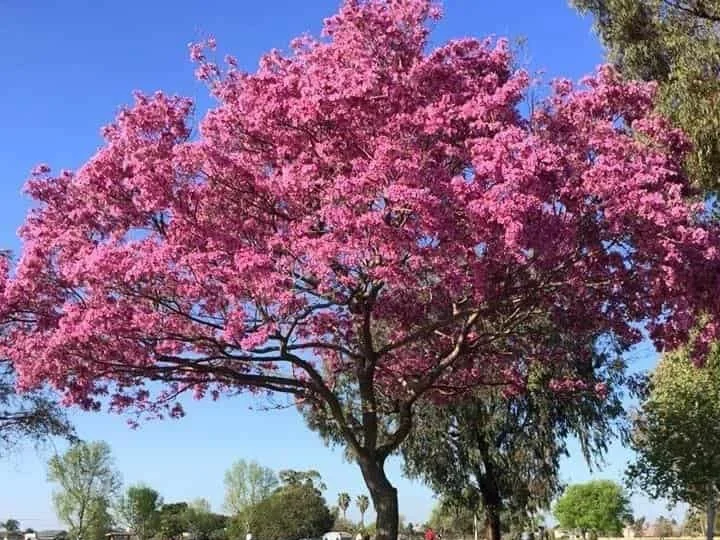
Tabebuia is a newer introduction to Pakistan’s garden scene, but it’s quickly becoming one of the most talked-about ornamental trees in Pakistan. There are two popular varieties — Tabebuia rosea, which has pink flowers, and Tabebuia aurea (also called the Golden Trumpet Tree), which has yellow flowers. Both are absolutely breathtaking when they bloom.
The most amazing thing about Tabebuia is that it blooms when it’s completely bare — the tree loses all its leaves and then explodes with color. It looks like a tree made entirely of flowers. This happens typically in February-March, making it one of the most dramatic seasonal flowering trees in the country.
Tabebuia grows well in warm areas and does great in cities like Lahore, Karachi, and Islamabad. It’s increasingly being planted in urban landscaping projects, parks, and along roadsides. If you’re looking for fast growing flowering trees in Pakistan that make a big visual impact, Tabebuia is worth serious consideration.
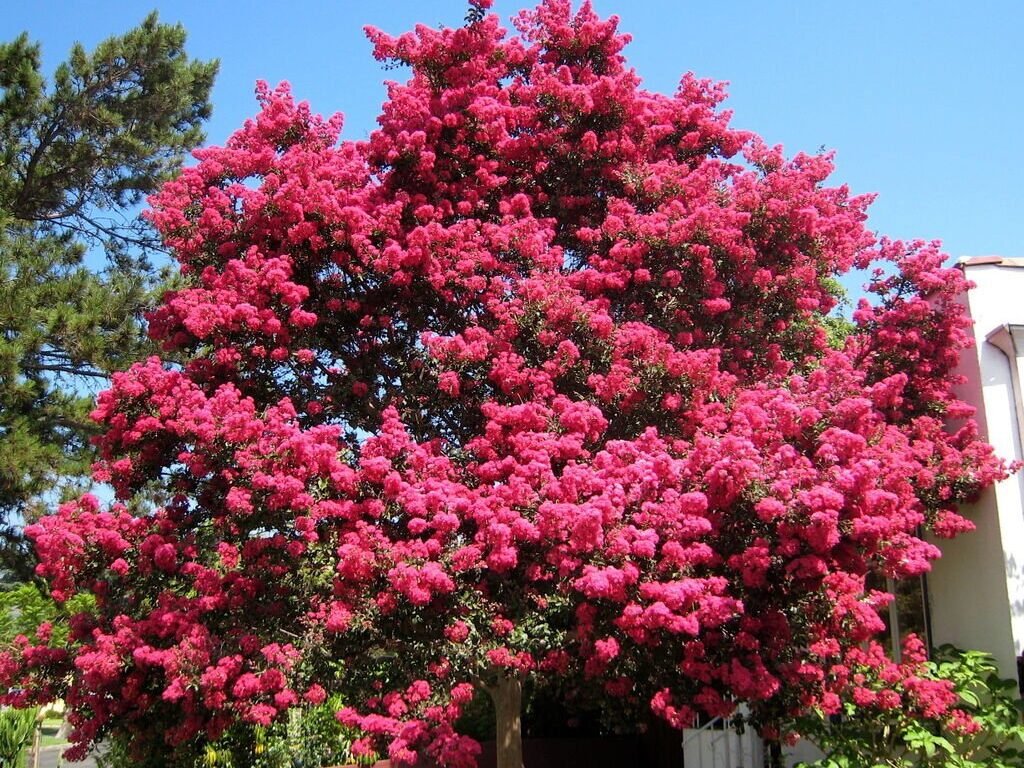
The Queen’s Crape Myrtle is a true summer star. It produces large clusters of purple, pink, or lavender flowers during the hottest months — June through September — when most other flowering trees have already finished blooming. This makes it incredibly valuable for anyone who wants a garden full of color all summer long.
It’s one of the few trees that thrives in Pakistan’s intense summer heat while still producing beautiful flowers. You’ll find it in parks, public gardens, and upscale housing societies across Punjab and Sindh. It grows to about 8–12 meters and creates good shade while keeping your garden colorful throughout the summer season.
Queen’s Crape Myrtle is a great option if you’re looking for the best trees to make your garden colorful in Pakistan during summer. It pairs beautifully with Gulmohar and Amaltas to create a garden that blooms in sequence from spring all the way through late summer.
You May Also Read: Top 10 Indoor Plants in Pakistan
Pakistan has hundreds of native tree species, many of which have beautiful flowers. These trees are naturally adapted to Pakistan’s climate, which means they’re usually more drought tolerant, heat resistant, and low maintenance than exotic varieties. Here are some important native trees with flowering characteristics.
The Semal tree is one of the most dramatic flowering trees in Pakistan. It produces large, cup-shaped red flowers in late winter, usually January-February, before the leaves appear. The flowers are so eye-catching that a single Semal tree in bloom stops traffic. It’s a large tree that grows well across the plains of Punjab and Sindh.
Siris is a common flowering tree found across Pakistan. It produces creamy, fragrant flowers that smell wonderful in the evening. It’s a large shade tree that also enriches soil by fixing nitrogen, making it both beautiful and ecologically useful. It’s one of the most common ornamental trees in Pakistan found along roadsides and in parks.
While Kikar might not be the first tree you think of when someone says ‘flowering tree,’ it produces beautiful little yellow puff flowers that are incredibly fragrant. It’s one of the toughest trees in Pakistan — surviving drought, heat, and poor soil — and is one of the most common garden trees in Pakistan’s rural areas. It’s used for firewood, fodder, and its gum has commercial value too.
Beyond the well-known favorites, there are some exotic ornamental trees in Pakistan that are gaining popularity among serious gardeners and landscaping professionals. These trees can take your garden to a completely different level.
The Pink Shower Tree (Cassia javanica) is a cousin of the Amaltas that produces spectacular clusters of pink and white flowers. It blooms in spring and summer and is well-suited to warm, humid climates. The Hong Kong Orchid Tree (Bauhinia blakeana) is another stunning option with deep purple orchid-like flowers that bloom from October through March — making it one of the rare winter-blooming trees available in Pakistan.
Magnolia is growing in popularity in the cooler regions of Pakistan, particularly in areas around Murree, Abbottabad, and Islamabad. The large, creamy white or pale pink flowers are spectacular and have a wonderful fragrance. They do need cooler temperatures and more water than most Pakistani natives, but the payoff is extraordinary.
Tibouchina, also called the Glory Tree, is a newer introduction that produces intense purple flowers almost continuously throughout the warm season. It’s a smaller tree, perfect for flowering trees in Pakistan for home garden use, especially in planters and small garden beds. It does best in areas with mild winters.
You might be wondering how to grow flowering trees in Pakistan, especially if you’re a first-time gardener. The good news is that most flowering trees are surprisingly easy to grow once you understand a few basics. Here’s a simple guide to get you started.
The most important thing is matching the tree to your local climate. Flowering trees in Lahore and Punjab do best with heat-tolerant species like Amaltas, Gulmohar, and Kachnar. Flowering trees in Karachi thrive when they can handle humidity and heat — Champa, Gulmohar, and Bottlebrush are excellent choices. For flowering trees in Islamabad and KPK, you can grow Jacaranda, Magnolia, and Tabebuia more easily thanks to the milder temperatures.
Timing matters. The best time to plant most flowering trees in Pakistan is in late winter — February and March — when the weather starts warming up but before the intense summer heat arrives. You can also plant in early fall (September-October) to give roots time to establish before winter. For tropical species like Gulmohar and Champa, wait until after the last cold spell in February.
Most flowering trees prefer well-draining soil. If your soil is heavy clay, mix in some sand and compost before planting. For the first few months, water your newly planted tree every 2-3 days. Once established, most of these trees are drought tolerant and only need deep watering once or twice a week during dry spells.
A slow-release fertilizer applied in early spring encourages healthy growth and better flowering. Don’t over-fertilize — too much nitrogen gives you lots of leaves but fewer flowers. An annual application of compost around the base of the tree is usually enough to keep most flowering trees happy and blooming well.
Summer in Pakistan is intense, but that doesn’t mean your garden has to look dull. Several of the best flowering trees in Pakistan actually bloom during the hottest months. Gulmohar is at its absolute peak from May through July. Queen’s Crape Myrtle blooms from June through September. Amaltas is usually finishing up by June, overlapping nicely with Gulmohar.
Champa blooms consistently from April through October, making it one of the trees that bloom nearly all year in Pakistan’s warmer zones. Bottlebrush produces its red spikes in spring and often flowers again in fall. For a garden that stays colorful from spring through late summer, combine Kachnar (winter-spring) with Gulmohar (summer) and Queen’s Crape Myrtle (mid to late summer).
Many people ask about evergreen flowering trees in Pakistan because they want year-round greenery without the mess of falling leaves. The good news is that several popular flowering trees keep their leaves year-round in Pakistan’s climate.
Champa is effectively evergreen in most of Pakistan’s warm zones, keeping its thick, glossy leaves throughout the year. Bottlebrush is another evergreen flowering tree that maintains its foliage in all seasons. Neem, while not known primarily as an ornamental flowering tree, produces small white flowers and stays green all year — making it both practical and beautiful.
Magnolia grandiflora, if grown in the right conditions, is also evergreen and produces spectacular white blooms in spring and summer. For people looking for shade trees with flowers in Pakistan that also stay green all year, these evergreen options are ideal for gardens, driveways, and landscaping projects.
If you’re a landscape designer or planning a large garden, park, or housing society project, choosing the right flowering trees is crucial. The best approach is to mix trees with different bloom times so there’s always something beautiful happening throughout the year.
For large public spaces and parks, Gulmohar, Amaltas, and Jacaranda are the gold standard in Pakistan. They create dramatic color, provide good shade, and are well-known and beloved by the public. For residential housing societies, mixing Tabebuia, Kachnar, and Queen’s Crape Myrtle creates a more varied and refined aesthetic.
For roadsides and avenues, heat resistant flowering trees in Pakistan like Amaltas and Bottlebrush are ideal. They survive pollution, compacted soil, and limited watering — all typical challenges in urban landscaping. The best nursery for flowering trees in Pakistan will be able to supply these in bulk for commercial projects. Local nurseries in Lahore, Karachi, and Islamabad usually stock all the major species, and flowering tree prices in Pakistan are generally very reasonable.
Table 2: Quick Care Guide for Flowering Trees in Pakistan
| Tree Name | Water Needs | Sunlight | Growth Rate | Best For |
| Amaltas | Low | Full Sun | Moderate | Roadsides, Parks |
| Gulmohar | Moderate | Full Sun | Fast | Large Gardens, Shade |
| Jacaranda | Moderate | Full Sun | Moderate | Home Gardens, Streets |
| Kachnar | Low-Moderate | Full Sun | Moderate | Home Gardens, Hedges |
| Champa | Low | Full Sun | Slow-Moderate | Home Gardens, Pots |
| Bottlebrush | Low | Full Sun | Fast | Drought Zones, Fences |
| Tabebuia | Moderate | Full Sun | Moderate | Landscaping, Gardens |
| Semal | Low | Full Sun | Fast | Large Open Spaces |
For small gardens, Champa, Kachnar, and Bottlebrush are the top picks. They stay small (under 8 meters), are low maintenance, and produce stunning flowers. Champa can even grow in a large pot on a terrace.
Amaltas, Gulmohar, Champa, and Bottlebrush are the best heat resistant flowering trees in Pakistan. They thrive in temperatures above 40°C and need minimal watering once established.
Yes! Amaltas, Kachnar, Champa, Bottlebrush, and Kikar are all drought tolerant flowering trees that require less water. They’re perfect for hot, dry regions like Multan, Bahawalpur, and parts of Sindh.
You can buy flowering trees in Pakistan from online plant nurseries that deliver to almost every major city, making it easy to shop from home. Many nurseries offer a wide range of ornamental and flowering trees, including seasonal bloomers and landscape plants.
One of the popular options is TinyFolia Online Plant Nursery, which is an online nursery that offers a variety of plants, including flowering trees, decorative plants, and garden essentials. It is often presented as Pakistan’s No.1 online plant nursery, with customers choosing it for convenient delivery and a wide plant selection.
No tree truly blooms 365 days a year, but Champa comes closest in warm coastal areas like Karachi, flowering almost continuously from spring through fall. Bottlebrush also has extended blooming periods. For year-round color, plant multiple trees with staggered bloom seasons.
If you’re ready to start planting, you don’t have to look far. TinyFolia Online Plant Nursery is widely recognized as Pakistan’s No. 1 online plant nursery, offering delivery all across the country.
TinyFolia specializes in:
With a wide selection, reliable delivery, and quality plants, TinyFolia makes it easy for anyone—whether beginner or expert—to create a beautiful green space at home.
Pakistan is blessed with a climate that supports an incredible variety of flowering trees. From the golden chains of Amaltas to the purple haze of Jacaranda, from the fiery blaze of Gulmohar to the delicate blooms of Champa, there’s a perfect flowering tree for every garden, every street, and every city in the country.
Whether you’re looking for low maintenance flowering trees in Pakistan, fast growing options that quickly fill your garden with color, or exotic ornamental trees that make your landscape stand out — the options are truly endless. The key is to choose trees that suit your local climate and your personal taste, and to give them the basic care they need to thrive.
Pakistan has a long tradition of beautiful gardens and tree-lined streets. Every Gulmohar you plant, every Jacaranda you nurture, and every Amaltas you help grow is a contribution to making this country more beautiful, cooler, and greener. So head to your nearest nursery for flowering trees in Pakistan, pick your favorites from the flowering trees Pakistan list we’ve shared here, and start planting. Your garden — and your neighborhood — will thank you for it.
Happy planting!
